

Plumbing problems can strike when you least expect them, but minor leaks and undetected corrosion cause more than $10 billion in property damage every year in the United States. Regular plumbing maintenance is one of the easiest ways to protect your home and avoid wasteful surprises on your water bill. By following a proven maintenance checklist, you can spot warning signs early, keep your plumbing running smoothly, and prevent expensive repairs down the line.
Table of Contents
- Step 1: Gather Essential Plumbing Maintenance Tools And Supplies
- Step 2: Inspect Visible Plumbing For Leaks And Corrosion
- Step 3: Test Water Pressure And Drainage Throughout Your Home
- Step 4: Evaluate Water Heater Performance And Safety Features
- Step 5: Check Water Filtration And Shut-Off Systems For Reliability
- Step 6: Verify Overall System Integrity And Schedule Professional Service
Quick Summary
| Key Point | Explanation |
|---|---|
| 1. Assemble essential plumbing tools | Gather tools like wrenches, tape, and pliers for effective maintenance and easier repairs. |
| 2. Conduct regular inspections for leaks | Check exposed pipes for moisture and corrosion signs to catch issues early and avoid extensive damage. |
| 3. Test water pressure and drainage | Use a gauge to ensure proper water pressure and evaluate the drainage speed to identify potential blockages. |
| 4. Inspect water heater performance | Regularly check the water heater’s safety features and functionality to improve efficiency and prevent hazards. |
| 5. Schedule professional inspections | Get annual assessments from professionals to identify hidden problems that regular inspections might miss. |
Step 1: Gather essential plumbing maintenance tools and supplies
Preparing for plumbing maintenance starts with assembling the right tools and supplies. According to the EPA WaterSense guidelines, having a well-organized toolkit can help homeowners perform routine checks and minor repairs efficiently.
Your essential plumbing maintenance toolkit should include:
- Adjustable pipe wrench (10 and 14-inch sizes)
- Plumber’s tape (white Teflon tape)
- Plunger with flange
- Basin wrench
- Hacksaw with extra blades
- Drain snake or auger (manual 25-foot length)
- Flashlight
- Safety glasses
- Waterproof work gloves
- Bucket
- Silicone-based lubricant
- Assorted screwdrivers (flathead and Phillips)
As recommended by the National Association of Certified Home Inspectors, investing in quality tools will save you time and potential repair costs. Store these tools in a clean dry area where they are easily accessible but protected from moisture.
Pro tip: Check your toolkit annually and replace any damaged or rusted tools to ensure they perform effectively when you need them most. Always wear safety glasses and gloves during any plumbing maintenance work to protect yourself from potential injuries.
Step 2: Inspect visible plumbing for leaks and corrosion
Spotting potential plumbing issues early can save you thousands in water damage and repair costs. According to the EPA WaterSense program, regular visual inspections of your home’s visible plumbing are crucial for preventing water waste and catching minor problems before they escalate.
To thoroughly inspect your plumbing, start by examining all exposed pipes under sinks, behind toilets, in crawl spaces, and near water heaters. Look for these key warning signs:
- Water droplets or moisture around pipe connections
- White or greenish calcium buildup
- Rust colored or flaking metal surfaces
- Green or blue stains around copper pipe joints
- Soft or warped wood near pipe locations
- Musty odors around plumbing fixtures
As recommended by the National Association of Certified Home Inspectors, use a bright flashlight and dry paper towel to help detect moisture. Wipe suspicious areas and check if the paper towel becomes damp.
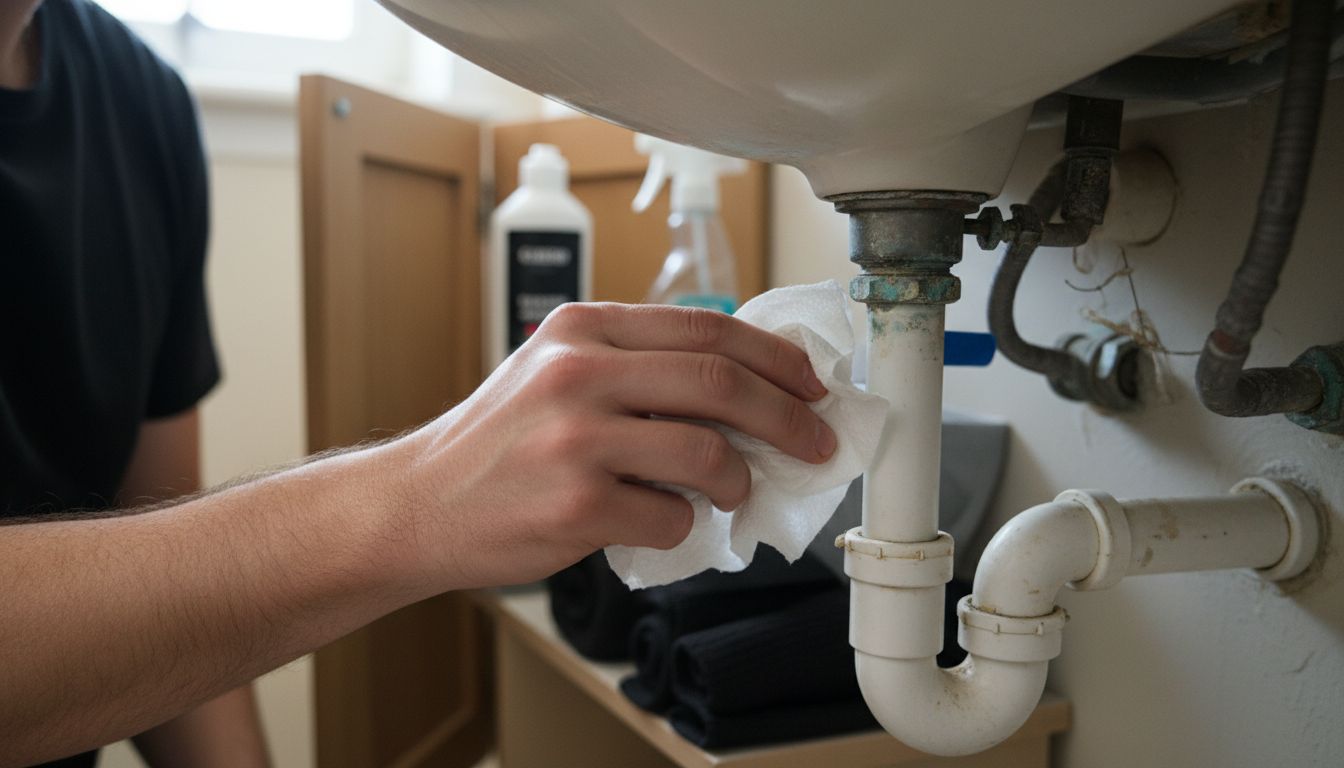 Small wet spots can indicate developing leaks that might not be immediately visible.
Pro tip: If you discover any signs of significant corrosion or persistent moisture, do not attempt complex repairs yourself. Contact a professional plumber who can accurately assess and resolve potential structural or plumbing system issues. Catching these problems early with our maintenance tips guide can help prevent costly emergency repairs down the line.
Step 3: Test water pressure and drainage throughout your home
Ensuring proper water pressure and drainage is critical for maintaining your home’s plumbing system. According to the EPA WaterSense program, regular testing helps prevent potential water waste and identifies underlying plumbing issues before they become expensive problems.
To test water pressure, you will need a water pressure gauge that attaches to an outdoor spigot or washing machine hookup. Follow these steps:
- Ensure all water fixtures are turned off inside your home
- Attach the pressure gauge to an exterior water connection
- Read the pressure measurement
- Ideal residential water pressure ranges between 40 to 60 pounds per square inch (PSI)
- Pressures below 40 PSI indicate potential flow problems
- Pressures above 60 PSI might damage pipes and appliances
For drainage tests, the National Association of Certified Home Inspectors recommends checking each fixture systematically. Run water in sinks, showers, and tubs and observe how quickly water drains. Slow drainage could signal developing clogs or potential pipe issues.
Pro tip: If you notice consistently low water pressure or recurring drainage problems, consider scheduling a professional inspection with our water quality experts to diagnose and resolve underlying plumbing system challenges.
Step 4: Evaluate water heater performance and safety features
Maintaining your water heater is crucial for ensuring reliable hot water and preventing potential safety hazards. According to the EPA WaterSense program, regular performance evaluations can help improve energy efficiency and extend the lifespan of your water heating system.
Begin your water heater inspection by checking these key performance and safety indicators:
- Temperature and pressure relief valve functionality
- Signs of rust or corrosion on tank exterior
- Unusual sounds during heating cycles
- Consistent water temperature
- Visible water leaks around base or connections
- Age of water heater (typically 8 to 12 years maximum lifespan)
The National Association of Certified Home Inspectors recommends testing the temperature and pressure relief valve annually. Lift the valve lever and ensure water flows freely and stops when released. If water continues to drip or the valve appears corroded, it may need replacement.
Pro tip: If you encounter any signs of significant wear or performance issues, consult our water heater upgrade guide to understand when replacement might be more cost effective than repeated repairs.
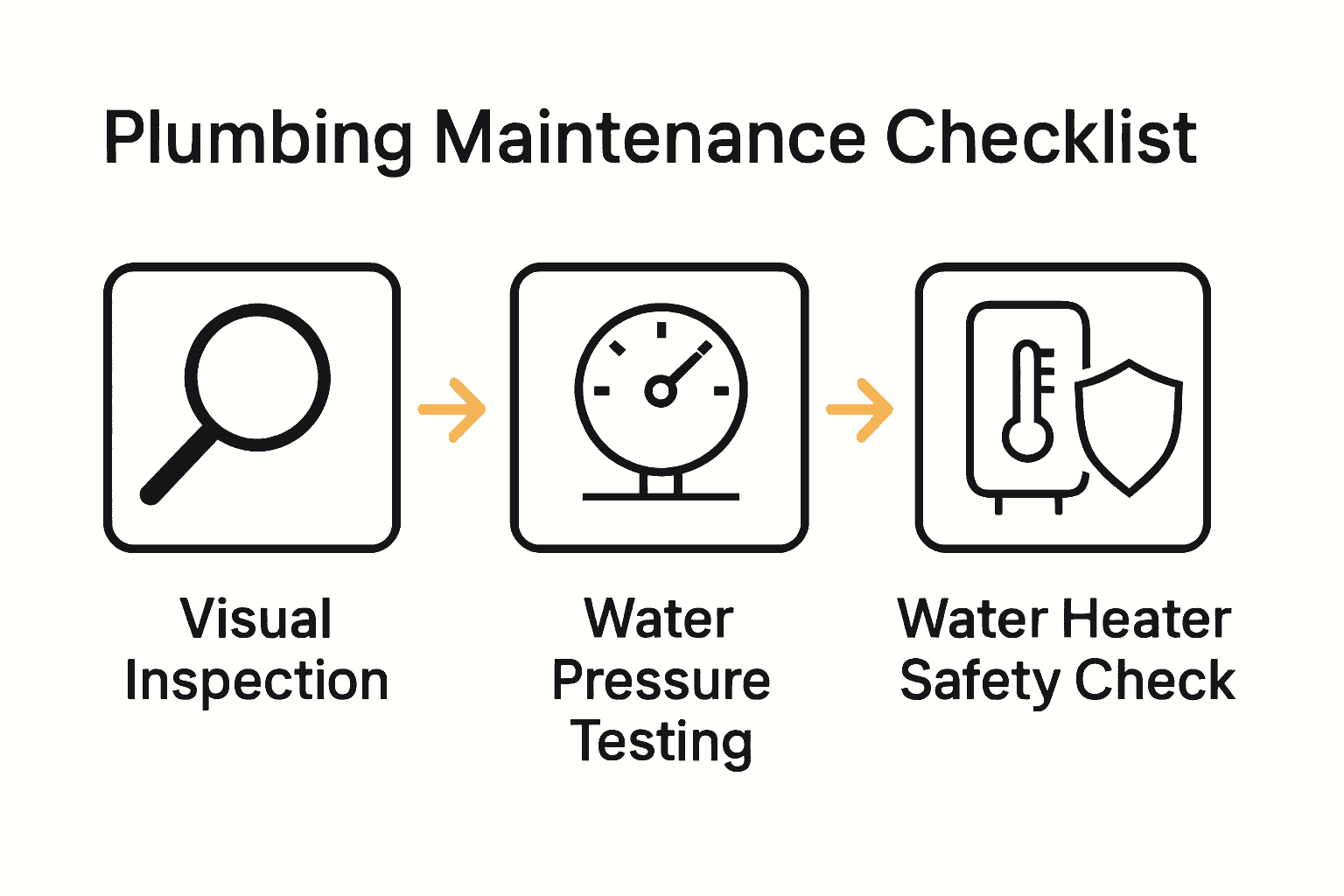 Annual professional inspections can help catch potential problems before they become expensive emergencies.
Step 5: Check water filtration and shut-off systems for reliability
Protecting your home’s water supply requires regular inspection of filtration and shut-off systems. According to the EPA WaterSense program, proactive maintenance helps prevent potential water damage and ensures clean water quality throughout your home.
Start by locating and testing your main water shut-off valve. This critical component can stop water flow to your entire house during emergencies. Follow these key inspection steps:
- Identify the main shut-off valve location
- Test valve movement smoothly without excessive force
- Check for visible rust or corrosion
- Ensure valve opens and closes completely
- Lubricate valve mechanism if it feels stiff
- Mark valve location clearly for quick access during emergencies
The National Association of Certified Home Inspectors recommends examining water filtration systems for signs of sediment buildup or reduced water flow. Inspect filter housings for cracks and verify that filter cartridges are within their recommended replacement timeline.
Pro tip: If you want to upgrade your home’s water quality and filtration systems, explore our plumbing upgrades guide to understand the latest technologies and potential improvements for your specific needs. Regular maintenance can prevent costly water damage and ensure your family receives clean, safe water.
Step 6: Verify overall system integrity and schedule professional service
Comprehensive plumbing maintenance goes beyond DIY checks and requires professional expertise. According to the EPA WaterSense program, periodic professional assessments are crucial for identifying potential issues that might not be visible during routine homeowner inspections.
As you complete your personal plumbing maintenance checklist, compile a detailed record of your observations including:
- Areas of previous repair
- Potential problem zones
- Unusual sounds or performance changes
- Water pressure variations
- Visible wear on pipes and fixtures
- Age of major plumbing components
The National Association of Certified Home Inspectors recommends scheduling annual professional inspections to thoroughly evaluate system performance. Professional technicians can conduct comprehensive diagnostic tests that go beyond surface level assessments and identify potential future maintenance requirements.
Pro tip: If you want a thorough understanding of your home’s plumbing health, consider scheduling a complete system evaluation with our signs of plumbing problems guide to understand what professional technicians look for during a detailed inspection.
Keep Your Home’s Plumbing Reliable with Expert Support
Managing your plumbing with a detailed checklist like the one in this article is essential to prevent leaks, corrosion, and costly repairs. When it comes to protecting your home from water damage and maintaining water quality, having the right tools and expertise is just as important as spotting early warning signs. Whether you are testing water pressure, inspecting your water heater, or ensuring shut-off valves are functional, the challenges can feel overwhelming without professional guidance.
Take control of your plumbing maintenance with trusted help from North End Plumbing, Heating & Air. Our team serves Sonoma, Marin, and Napa Counties with honest, high-quality plumbing solutions tailored to your home’s needs. Visit our Info & Education page to learn more tips and tricks. Ready to move from DIY checks to reliable service? Explore our full range of plumbing services designed to keep your water flowing safely and efficiently all year long.
Frequently Asked Questions
What essential plumbing maintenance tools should I have at home?
To maintain your plumbing, you should have tools such as an adjustable pipe wrench, plumber’s tape, a plunger, and a drain snake. Gather these tools for regular inspections and minor repairs to enhance your home’s plumbing reliability.
How can I check for leaks in my home’s plumbing system?
Inspect visible pipes for water droplets, moisture, or signs of corrosion. Use a flashlight and a dry paper towel to wipe around joints, as small wet spots can indicate developing leaks.
What should I do if my water pressure is too high or too low?
Measure your water pressure using a gauge; ideal pressure ranges from 40 to 60 PSI. If it’s below 40 PSI, it may suggest flow issues, while above 60 PSI could risk pipe damage. Consider scheduling a professional inspection to address these issues.
How do I evaluate the performance of my water heater?
Regularly check for signs such as rust, unusual sounds, or visible leaks around your water heater. Test the temperature and pressure relief valve annually to ensure it functions properly, and consider replacing the unit if it shows significant wear beyond its typical lifespan of 8 to 12 years.
How do I inspect my home’s water filtration system?
Locate your water filtration system and check for visible signs of sediment buildup, cracks, or decreased water flow. Ensure filter cartridges are replaced as recommended to maintain clean water quality throughout your home.
When should I schedule a professional plumbing inspection?
Schedule a professional assessment at least once a year to thoroughly evaluate your plumbing system. This can help identify hidden issues and prevent costly repairs down the line, ensuring your home’s plumbing remains in good condition.
Recommended
- 7 Essential Plumbing Maintenance Tips 2025 for Homeowners – North End Plumbing, Heating and Air
- 7 Smart Examples of Plumbing Upgrades for Your Home – North End Plumbing, Heating and Air
- Water Heater Flushing: Complete Guide to Key Benefits – North End Plumbing, Heating and Air
- Coffee Machine Preventative Maintenance Guide for Optimal Performance – Coffee Sensor
- 7 Essential Steps for a Complete Apartment Maintenance Checklist – Guestly Homes