

Did you know that failing to flush your water heater can reduce its efficiency by up to 40 percent? Most homeowners never realize how much hidden sediment and mineral buildup can affect their hot water supply and energy bills. Regular water heater flushing protects your system, improves performance, and may even add years to its lifespan, helping you avoid costly repairs and discomfort.
Key Takeaways
| Point | Details |
|---|---|
| Importance of Flushing | Regular flushing is essential to maintain water heater efficiency and performance. |
| Risks of Neglect | Skipping maintenance can lead to significant efficiency loss, increased costs, and potential system failure. |
| Benefits of Professional Help | Professional flushing ensures thorough cleaning and component inspection, extending system lifespan. |
| Recommended Frequency | Annual flushing is advised, with semi-annual for homes in hard water areas, to prevent accumulation of sediments. |
Table of Contents
- Defining Water Heater Flushing And Its Purpose
- How Mineral Buildup Impacts Water Heaters
- Main Benefits Of Regular Water Heater Flushing
- Risks Of Skipping Scheduled Flushing
- Comparing Flushing Methods And Professional Help
Defining Water Heater Flushing and Its Purpose
Water heater flushing is a critical maintenance procedure that involves systematically draining and cleaning your water heater tank to remove accumulated sediment, minerals, and debris. According to research from Pick HVAC, these deposits—including calcium, magnesium, rust, and sand—settle at the tank’s bottom and create significant performance challenges for your home’s hot water system.
The primary purpose of water heater flushing is to restore and maintain your system’s efficiency and performance. These sediment buildups act like an insulating layer, dramatically reducing heat transfer and forcing your water heater to work harder. As a result, this can lead to several problematic outcomes:
- Increased energy consumption
- Reduced hot water capacity
- Higher utility bills
- Potential premature component failure
According to Call Oasis, experts recommend flushing your water heater annually under normal water conditions, with more frequent service—every six months—recommended for homes in hard water areas. This regular maintenance not only preserves your system’s performance but can also be a requirement for maintaining manufacturer warranty coverage. Professional plumbers like our team at North End Plumbing can help you establish the ideal maintenance schedule tailored to your specific water quality and system requirements.
How Mineral Buildup Impacts Water Heaters
Mineral buildup in water heaters represents a silent but significant threat to your home’s hot water system, gradually compromising performance and efficiency. According to research from Pick HVAC, sediment accumulation can dramatically reduce water heater efficiency by 25-40%, creating a cascade of potential problems that impact both your comfort and wallet.
The consequences of unchecked mineral deposits extend far beyond simple performance issues.
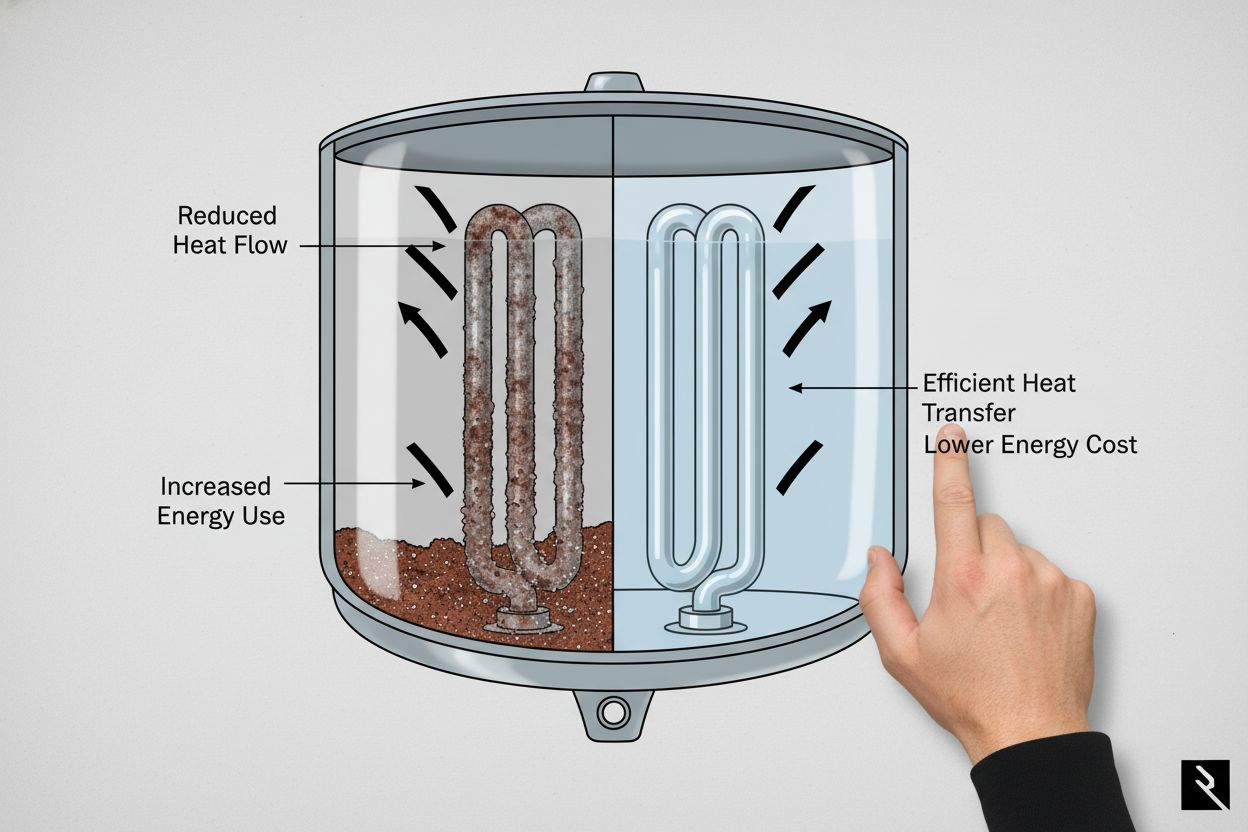 As these sediments accumulate, they create several critical challenges:
- Energy Inefficiency: Forcing the system to work harder and consume more electricity
- Reduced Water Quality: Introducing sediment directly into your water supply
- Uneven Heating: Creating noisy, inconsistent water temperature
- Accelerated Corrosion: Increasing the risk of system leaks and premature failure
Courtesy Plumbing and Heating notes that mineral buildup essentially transforms your water heater into an inefficient, strain-prone system. The dense layer of minerals acts like an insulating barrier, preventing efficient heat transfer and forcing heating elements to work exponentially harder. This additional strain not only increases energy costs but can potentially shorten your water heater’s lifespan by several years, turning what should be a reliable home system into a ticking time bomb of potential repairs and replacements.
Main Benefits of Regular Water Heater Flushing
Regular water heater flushing offers homeowners a powerful strategy to protect and optimize their home’s hot water system. According to Call Oasis, this maintenance practice delivers multiple critical benefits that directly impact your comfort, energy efficiency, and system longevity.
The key advantages of consistent water heater maintenance include:
- Enhanced Heating Efficiency: Removing sediment allows for faster, more uniform water heating
- Lower Energy Consumption: Less strain on heating elements translates to reduced electricity usage
- Improved Water Quality: Eliminating stagnant mineral deposits and potential bacterial growth
- Quieter System Operation: Reducing noise caused by sediment buildup
- Warranty Protection: Maintaining manufacturer’s recommended service intervals
Research from SB Plumbing Utah reveals an impressive benefit: regular annual flushing can potentially extend your water heater’s lifespan by up to five years. By preventing corrosion and reducing mechanical stress, this simple maintenance procedure transforms your water heater from a potential problem source into a reliable, efficient home system.
If you’re looking to optimize your home’s water heating performance, professional water heater flushing is an essential investment in your home’s infrastructure.
Risks of Skipping Scheduled Flushing
Neglecting regular water heater maintenance might seem like a minor oversight, but the consequences can be surprisingly severe and costly. According to Pick HVAC, skipping scheduled flushing allows sediment to accumulate rapidly, creating a domino effect of potential system failures that can compromise your home’s hot water infrastructure.
The potential risks of ignoring water heater maintenance are significant and multifaceted:
- Dramatic Efficiency Reduction: Sediment buildup can decrease heating efficiency by up to 40%
- Increased Energy Costs: Harder-working systems consume more electricity
- Potential Tank Damage: Continuous strain can lead to premature tank deterioration
- Water Quality Degradation: Potential for discolored or foul-smelling water
- Warranty Invalidation: Manufacturers may refuse coverage due to lack of maintenance
Call Oasis warns that prolonged neglect can transform a manageable maintenance task into an expensive emergency replacement scenario. The financial implications extend far beyond a simple repair—you could be looking at a complete water heater replacement, which can cost significantly more than routine maintenance. If you want to understand more about water heater upgrades and maintenance, professional guidance can help you avoid these costly pitfalls and keep your system running efficiently.
Comparing Flushing Methods and Professional Help
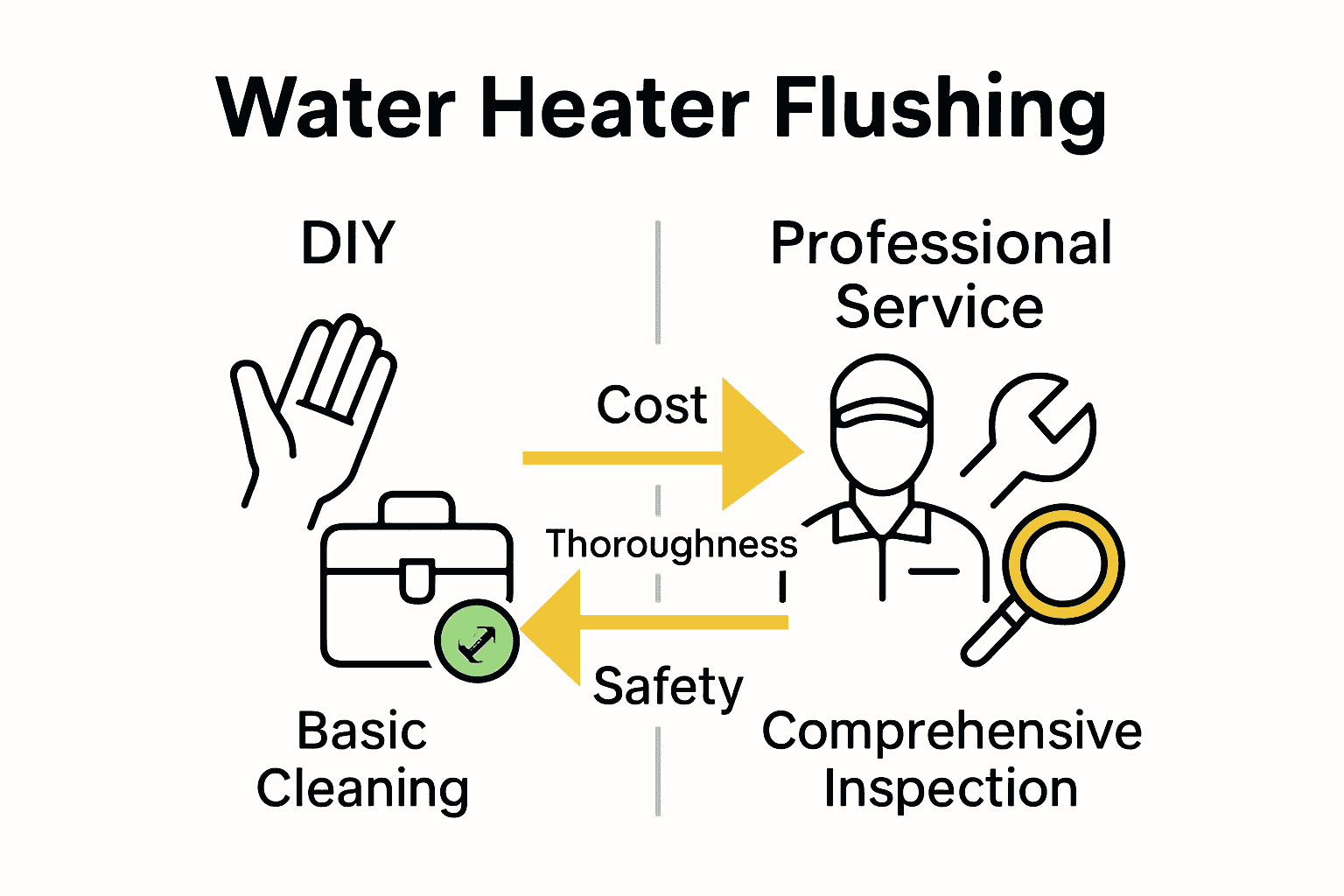
When it comes to water heater maintenance, homeowners face a critical choice between DIY flushing and professional service. According to Call Oasis, while basic flushing can be performed at home, the process requires careful attention to manufacturer guidelines and specific safety steps that vary depending on water hardness and system type.
The key differences between DIY and professional flushing methods include:
Here’s a comparison of DIY vs. professional water heater flushing:
| Feature | DIY Flushing | Professional Flushing |
|---|---|---|
| Cost | Low | Higher (service fee) |
| Time Commitment | Self-managed | Scheduled, hands-off |
| Thoroughness | Basic sediment removal | Complete, detailed cleaning |
| Safety & Risk | Potential for mistakes | Expert, safe procedures |
| Component Inspection | Rarely performed | Included |
| Warranty Protection | Not always covered | Typically preserved |
DIY Approach:
- Lower cost
- Requires personal time and technical knowledge
- Potential risk of improper execution
- Limited comprehensive system assessment
Professional Service:
- Comprehensive system inspection
- Thorough sediment removal
- Professional assessment of component health
- Warranty preservation
SB Plumbing Utah highlights that professional flushing goes beyond simple sediment removal. Trained technicians conduct detailed inspections, checking critical components like the anode rod, valves, and overall system integrity. This approach not only ensures more thorough cleaning but can also prevent potential future breakdowns and extend your water heater’s operational lifespan. If you’re interested in understanding more about water heater maintenance, professional guidance can provide peace of mind and long-term system reliability.
Give Your Water Heater the Attention It Deserves—Start Protecting Your Comfort and Savings Today
Have you noticed your hot water struggling to keep up, or energy bills creeping higher? This article highlights how sediment and mineral buildup can quietly damage your water heater, drain its efficiency, and risk costly breakdowns. Flushing your water heater is more than routine maintenance—it’s a key step toward better performance, cleaner water, and longer-lasting equipment. If you’re ready to say goodbye to inconsistent hot water, noisy tanks, and surprise repairs, we have the solutions to bring peace of mind right to your doorstep. For even more information on water heater care and related plumbing needs, visit our North End Plumbing, Heating and Air resource section.

Let North End Plumbing, Heating & Air handle your next water heater flush or upgrade. Our licensed experts serve Sonoma, Marin, and Napa Counties with honest estimates and reliable workmanship. Don’t wait for buildup to become an emergency—schedule service now and keep your home running efficiently. Learn more or book your service at https://northendplumbing.co and experience the comfort and trust that local families depend on.
Frequently Asked Questions
What is water heater flushing?
Water heater flushing is a maintenance procedure that involves draining and cleaning the water heater tank to remove sediment and mineral buildup, improving efficiency and performance.
How often should I flush my water heater?
It is generally recommended to flush your water heater annually under normal conditions, and every six months if you live in an area with hard water.
What are the benefits of regular water heater flushing?
Regular flushing enhances heating efficiency, lowers energy consumption, improves water quality, reduces noise, and can extend your water heater’s lifespan by up to five years.
What are the risks of skipping water heater flushing?
Neglecting to flush your water heater can lead to reduced heating efficiency, increased energy costs, potential tank damage, degraded water quality, and possibly voided warranties due to lack of maintenance.
Recommended
- Why Upgrade Water Heater: Complete Guide for Homeowners – North End Plumbing, Heating and Air
- Uncategorized – North End Plumbing, Heating and Air
- How to Improve Your Home’s Water Quality with Filtration Systems in Northern California – North End Plumbing, Heating and Air
- Info – North End Plumbing, Heating and Air
- Achieve Effective Waterproofing Bathroom Tiles in 2025 – Tile Choices
- Bathroom Upgrades: Everything You Need to Know – Astrotech Construction