

Did you know that switching to a modern heat-pump water heater can save homeowners about $240 each year and pay for itself in just four years with the right rebates? Upgrading your water heater goes far beyond simple replacement. It transforms your home’s energy use, trims monthly expenses, and lessens environmental impact. With new technologies and financial incentives, making this change opens the door to lower bills, improved comfort, and a greener footprint for years to come.
Key Takeaways
| Point | Details |
|---|---|
| Upgrade Benefits | Modern water heaters offer increased efficiency, leading to substantial savings on energy bills and lower environmental impact. |
| Types to Consider | Homeowners should evaluate different water heater types, including tankless and heat-pump systems, based on energy efficiency and installation costs. |
| Replacement Indicators | Key signs your water heater needs replacing include age over ten years, leaks, and inconsistent hot water supply. |
| Financial Incentives | Numerous local and federal incentives are available in Northern California to make upgrading to energy-efficient water heaters more affordable. |
Table of Contents
- What Upgrading Your Water Heater Means
- Types of Water Heaters and Key Differences
- Efficiency, Cost Savings, and Modern Features
- Signs Your Current Water Heater Needs Replacement
- Incentives, Rebates, and Northern California Regulations
What Upgrading Your Water Heater Means
Upgrading your water heater isn’t just about replacing an old appliance. It’s a strategic home improvement decision that impacts your energy bills, comfort, and environmental footprint. Modern water heaters represent a significant leap forward in efficiency and performance compared to older models, offering homeowners substantial long-term benefits.
According to a Washington Post study, switching from a conventional water heater to an efficient heat-pump model can generate impressive financial returns. The research revealed that homeowners could save approximately $240 annually, with the upgrade paying for itself within just four years after available rebates. This isn’t just a minor improvement—it’s a substantial economic opportunity.
Further supporting the case for upgrades, recent academic research demonstrates the technological potential of advanced water heating systems. A field study highlighted that applying model predictive control to electric heat-pump water heaters could potentially:
- Reduce energy costs by 23–28%
- Decrease overall energy consumption by around 37%
- Provide more precise temperature management
- Lower household carbon emissions
Beyond the financial incentives, upgrading your water heater represents a commitment to more sustainable living. By investing in newer, more efficient technology, you’re not just saving money—you’re contributing to reduced energy consumption and supporting more environmentally responsible home infrastructure.
Types of Water Heaters and Key Differences
Navigating the world of water heaters can feel like exploring a complex landscape of technologies, each with unique strengths and considerations. Modern homeowners have several compelling options, ranging from traditional tank systems to innovative on-demand and heat-pump technologies that dramatically transform how we think about hot water production.
According to research on tankless water heating, on-demand water heaters represent a significant technological advancement. These systems heat water directly as it flows through the unit, eliminating the energy waste associated with traditional storage tanks. Key characteristics include:
- Continuous hot water supply
- Potential energy savings
- Compact installation footprint
- Reduced standby heat loss
Hybrid heat-pump water heaters offer another fascinating option. Research from industry experts reveals these systems combine a small storage tank with advanced pump technology, using ambient air temperature to generate hot water. While they require more initial investment and installation space, they deliver remarkable energy efficiency.
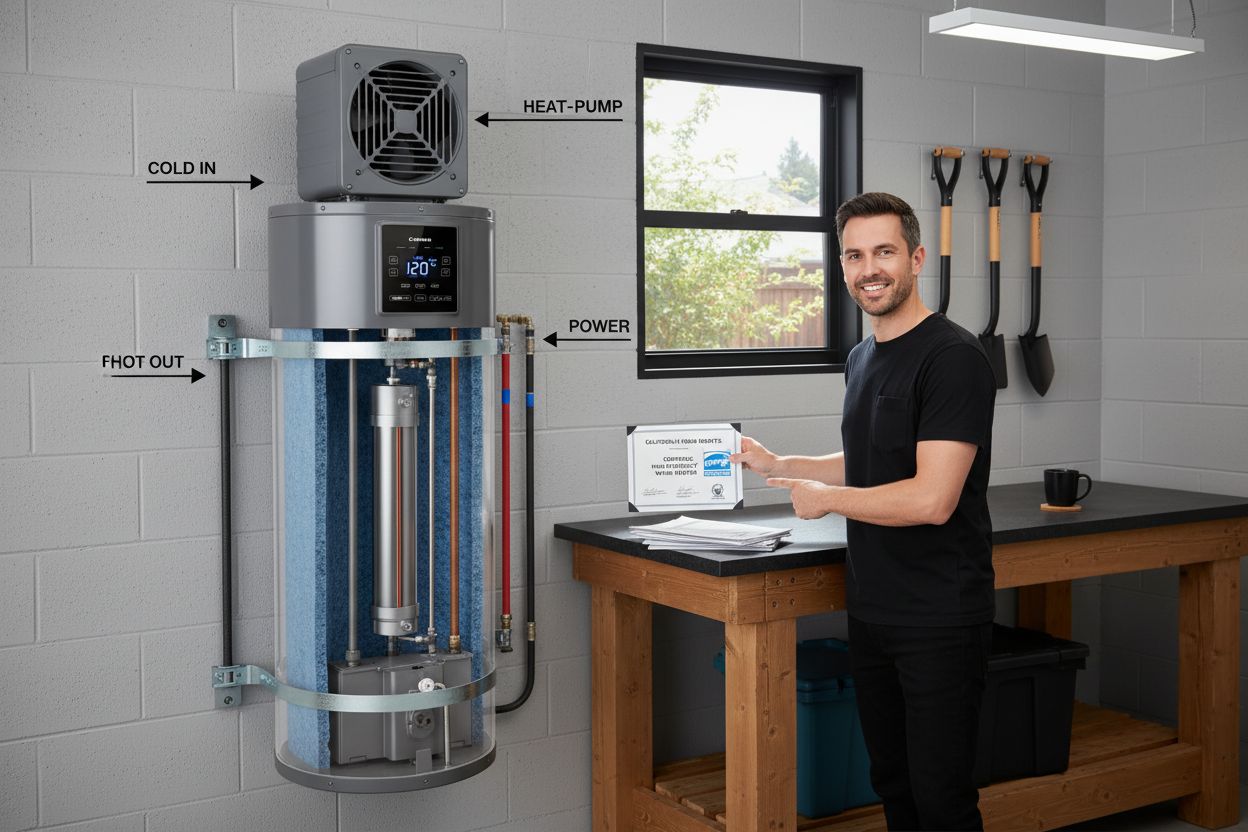
The primary water heater types break down into four main categories: traditional tank storage, tankless/on-demand, heat-pump/hybrid, and solar-powered systems. Each offers distinct advantages depending on your home’s specific hot water needs, energy infrastructure, and long-term efficiency goals. Your choice will ultimately depend on balancing upfront costs, ongoing energy expenses, available space, and your household’s hot water consumption patterns.
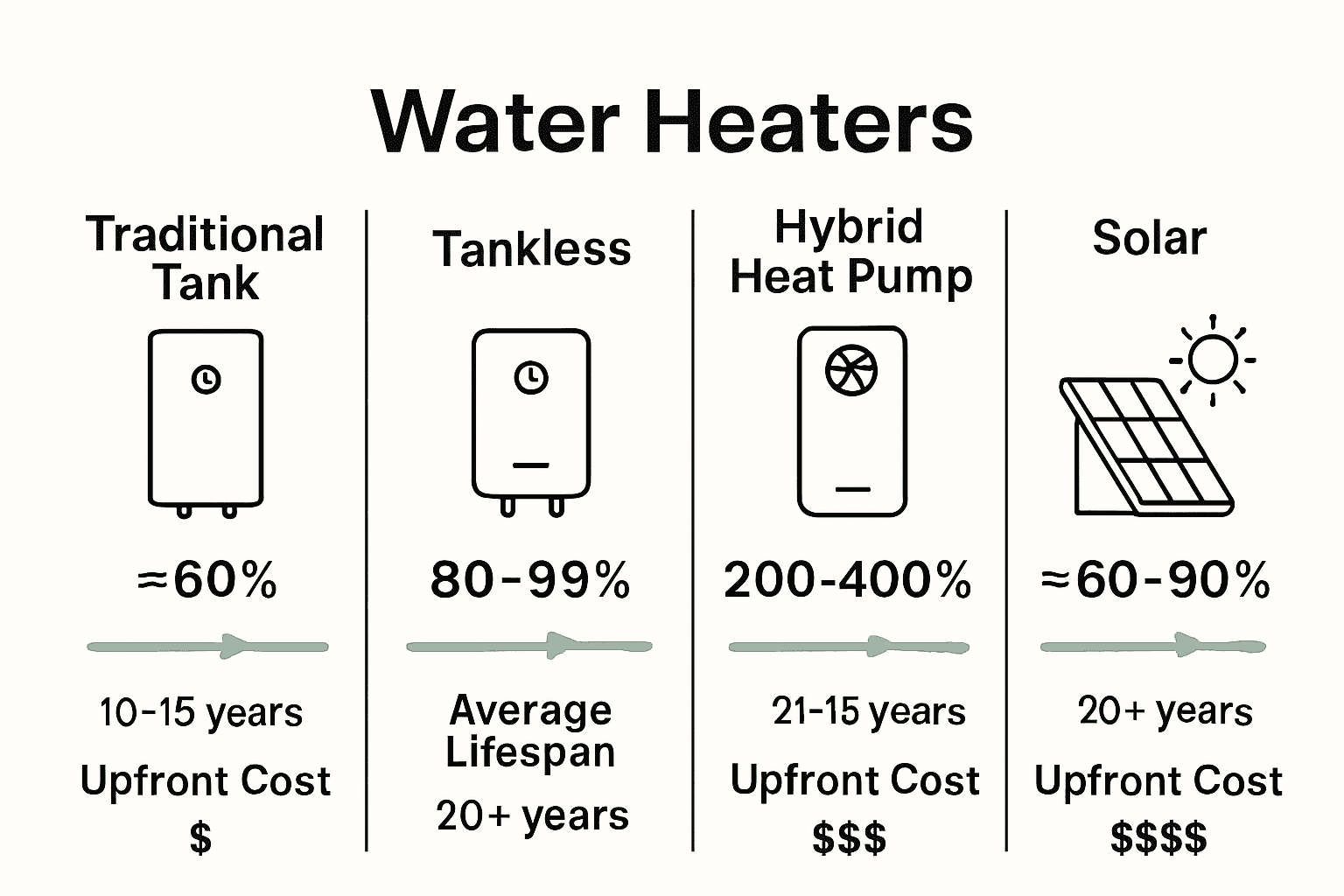
Here’s a comparison of major water heater types and their key features:
| Type | Efficiency | Upfront Cost | Lifespan |
|---|---|---|---|
| Traditional Tank Storage | Standard | Low | 8–12 years |
| Tankless/On-Demand | High | Moderate | Up to 20 years |
| Heat-Pump/Hybrid | Very High | Higher | 10–15 years |
| Solar-Powered | Highest (with sun) | Highest | 10–20 years |
Efficiency, Cost Savings, and Modern Features
Today’s water heaters are not just about generating hot water—they’re sophisticated home systems designed to maximize efficiency, reduce energy consumption, and provide unprecedented levels of control and convenience. Homeowners now have access to technologies that transform what was once a simple utility appliance into a smart, energy-saving investment.
Research from industry experts reveals remarkable potential in heat-pump water heaters. These advanced systems can be up to four times more efficient than conventional electric models, offering profound energy savings. The financial implications are significant—potential savings could reach $6,000 over a decade when factoring in federal tax credits and reduced energy consumption.
Modern hybrid units have revolutionized home water heating with cutting-edge features. According to attainable home research, contemporary models like the Rheem Proterra Hybrid now offer:
- Wi-Fi enabled controls
- Energy usage reductions up to 75%
- Extended 10-year warranties
- Smart monitoring capabilities
- Seamless integration with home automation systems
Beyond raw efficiency, these technological advancements represent a holistic approach to home energy management. By investing in a modern water heater, you’re not just purchasing an appliance—you’re upgrading your home’s entire energy ecosystem, reducing environmental impact while simultaneously cutting long-term operational costs.
Signs Your Current Water Heater Needs Replacement
Wondering if it’s time to replace your water heater? Understanding the warning signs can save you from unexpected breakdowns, costly emergency repairs, and potential water damage. Water heater age is the first and most critical indicator of potential replacement needs.
According to Home Depot’s maintenance guidelines, several key signs suggest your water heater might be nearing the end of its functional life:
- Age over 10 years
- Persistent water leaks
- Loud popping or crackling noises
- Rusty or cloudy water discharge
- Consistently cold water despite demand
Better Homes & Gardens research expands on these indicators, highlighting additional red flags homeowners should watch for. Typical warning signs include insufficient hot water volume, temperature inconsistencies, unexpectedly rising energy bills, visible tank corrosion, and the need for frequent repairs. It’s worth noting that tank-style water heaters typically last 8-12 years, while tankless models can extend up to 20 years with proper maintenance.
Proactive homeowners should conduct regular inspections and be prepared to invest in a replacement before a catastrophic failure occurs. While routine maintenance can extend your water heater’s life, it cannot prevent inevitable aging and performance degradation.
Incentives, Rebates, and Northern California Regulations
Northern California homeowners have unprecedented financial opportunities when upgrading their water heaters, with a robust ecosystem of incentives designed to encourage energy-efficient home improvements. Local and state programs are making sustainable upgrades more accessible than ever before.
According to Axios research, CleanPowerSF is leading the charge in supporting homeowners. Their innovative program offers:
- Up to $1,200 in bill credits
- Credits distributed as $50 monthly over two years
- Supports heat-pump water heater upgrades
- Complements federal and state rebate initiatives
Beyond local incentives, homeowners can leverage multiple financial supports. Federal tax credits provide significant relief for energy-efficient installations, while California’s stringent energy regulations continue to push technological innovation. These combined incentives can dramatically reduce the upfront costs of upgrading, making modern, efficient water heating systems more attainable for budget-conscious residents.
Navigating these incentive programs requires careful research and timing. Consulting with local energy efficiency experts, checking current federal tax credit listings, and staying informed about municipal programs can help maximize your potential savings. The goal isn’t just reducing immediate expenses—it’s creating long-term value through smart, sustainable home investments.
Take the Uncertainty Out of Water Heater Upgrades
Facing rising energy bills, chilly showers, or an aging water heater disrupts comfort and peace of mind. This article explains how efficient upgrades like heat-pump water heaters can cut costs, provide consistent hot water, and help meet local energy regulations. Many homeowners in Sonoma, Marin, and Napa Counties experience these exact pain points, especially when it comes to outdated systems or navigating the maze of incentives and rebates. If this guide made you realize it is time to consider a better solution, you deserve a provider who understands your needs and can handle every step of the process.
Visit our expert solutions for water heater replacement and discover how smart upgrades can transform your home.
Let our licensed team at North End Plumbing, Heating & Air help you boost efficiency, tap into rebates, and enjoy reliable hot water. Contact us today for honest advice, straightforward installation, and proven results from a trusted local partner. Ready to replace that old water heater and claim your savings? Act now and schedule your free estimate with us. Visit our main site to get started.
Frequently Asked Questions
What are the benefits of upgrading my water heater?
Upgrading your water heater can lead to significant energy savings, improved comfort, and decreased environmental impact. Modern water heaters, particularly heat-pump models, can save homeowners approximately $240 annually, paying for themselves within four years after rebates.
How do tankless water heaters compare to traditional tank models?
Tankless water heaters heat water on demand, providing a continuous supply of hot water without the energy waste associated with storage tanks. They typically offer higher efficiency and longer lifespans compared to traditional tank models, making them a compelling option for modern homes.
What are the signs that my water heater needs replacement?
You should consider replacing your water heater if it is over 10 years old, showing persistent leaks, producing unusual noises, delivering rusty or cloudy water, or failing to meet your hot water needs consistently. Regular inspections can prevent unexpected failures.
What incentives are available for upgrading to an energy-efficient water heater?
Homeowners can benefit from various incentives, including local bill credits and federal tax rebates for energy-efficient installations. Programs like CleanPowerSF offer financial support for upgrading to heat-pump water heaters, significantly reducing upfront costs.
Recommended
- Services – North End Plumbing, Heating and Air
- How to Improve Your Home’s Water Quality with Filtration Systems in Northern California – North End Plumbing, Heating and Air
- Uncategorized – North End Plumbing, Heating and Air
- Homepage – North End Plumbing, Heating and Air
Article generated by BabyLoveGrowth