

Nearly one in three American homes wastes energy simply because heating and cooling are not balanced from room to room. For homeowners across Sonoma, Marin, and Napa Counties, constant battles over uneven temperatures can leave some spaces stuffy while others stay chilly. By understanding HVAC zoning, you can debunk expensive myths and discover smart options to solve these issues, saving money while finally enjoying true year-round comfort throughout your home.
Table of Contents
- HVAC Zoning Basics and Common Myths
- Types of HVAC Zoning Systems Explained
- How HVAC Zoning Systems Operate
- Ideal Applications for Zoned HVAC
- Financial Costs and Energy Savings
- Common Mistakes and What to Avoid
Key Takeaways
| Point | Details |
|---|---|
| HVAC Zoning Enhances Comfort | Dividing a home into temperature-controlled zones allows for personalized comfort across different rooms. |
| Myths Surrounding Zoning | HVAC zoning is not only for new builds; existing systems can be retrofitted for customized comfort. |
| Cost vs. Savings | Although zoned systems have higher initial costs, they often lead to substantial energy savings and lower utility bills. |
| Avoid Common Pitfalls | Proper system sizing and professional assessments are crucial to maximize the benefits of HVAC zoning. |
HVAC Zoning Basics and Common Myths
HVAC zoning transforms how homeowners manage indoor comfort by dividing living spaces into independently controlled temperature areas. Unlike traditional single-thermostat systems, zoning allows precise temperature management across different rooms, recognizing that thermal needs vary throughout a home.
At its core, HVAC zoning works through a sophisticated network of dampers installed within air ducts, which open and close to direct heating and cooling precisely where needed. These dampers connect to individual zone thermostats, enabling room-by-room temperature control. Imagine having a warm living room while keeping bedrooms cooler for comfortable sleeping – that’s the practical magic of zoning.
Common myths about HVAC zoning often prevent homeowners from exploring this intelligent comfort solution. Contrary to popular belief, zoning isn’t exclusively for new construction or prohibitively expensive. Modern zoning systems can retrofit existing HVAC infrastructure, providing customized comfort without complete system replacement. Whether you have a two-story home with dramatically different temperature zones or want to optimize comfort in specific areas, zoning offers a flexible solution.
Pro tip: Consider a professional HVAC assessment to determine your home’s specific zoning potential and potential energy savings before making any installation decisions.
Types of HVAC Zoning Systems Explained
HVAC zoning systems offer homeowners a sophisticated approach to temperature control, with multiple configurations designed to meet diverse residential comfort needs. HVAC professionals recognize several primary zoning system types, each offering unique benefits for managing indoor climate.
The primary types of HVAC zoning systems include single-zone, multi-zone, and variable air volume (VAV) configurations. Single-zone systems provide uniform conditioning for an entire space, typically used in smaller homes or open floor plans where temperature variations are minimal. Multi-zone systems divide a home into distinct areas, each with independent temperature controls, allowing customized comfort for different rooms or levels. Variable air volume systems represent the most advanced option, dynamically adjusting airflow and temperature based on real-time demand, delivering unprecedented precision and energy efficiency.
Damper-based zoning remains the most common residential approach, utilizing motorized dampers strategically placed within ductwork to control airflow. These systems work by opening and closing dampers in specific zones, redirecting heated or cooled air precisely where needed. This method allows homeowners to create personalized temperature profiles, ensuring comfort in frequently used areas while potentially reducing energy consumption by minimizing conditioning in less-occupied spaces.
Pro tip: Consult with a local HVAC professional to assess your home’s unique layout and determine which zoning system configuration will provide the most effective comfort and energy efficiency for your specific needs.
Here’s a concise comparison of primary HVAC zoning system types and their key characteristics:
| Zoning Type | Number of Zones | Control Precision | Typical Home Application |
|---|---|---|---|
| Single-Zone | 1 | Basic | Small/open layouts |
| Multi-Zone | 2 or more | Moderate | Larger multi-level homes |
| VAV | Variable | High | Complex or luxury homes |
How HVAC Zoning Systems Operate
HVAC zoning systems represent a sophisticated approach to home temperature management, utilizing advanced technology to deliver precise climate control. The core operational mechanism involves a complex communication network between thermostats and a central control unit, allowing for intelligent and responsive temperature regulation throughout a home.
At the heart of these systems are motorized dampers, strategically positioned within the home’s ductwork. These mechanical gates can open and close independently, redirecting heated or cooled air to specific zones based on individual temperature requirements. When a particular zone’s thermostat signals a need for heating or cooling, the central control panel activates the corresponding dampers, ensuring that conditioned air is delivered only to areas requiring temperature adjustment. This targeted approach prevents energy waste by avoiding unnecessary conditioning of unoccupied or already comfortable spaces.

The system’s intelligence extends beyond simple on-off functionality. Advanced zoning systems continuously balance thermal comfort with energy efficiency by modulating airflow and temperature output based on real-time zone demands. Sophisticated control panels can learn household patterns, anticipate temperature needs, and make micro-adjustments that maintain consistent comfort while minimizing energy consumption. This dynamic operation allows different areas of a home to maintain individualized temperature settings simultaneously, creating a personalized climate experience that traditional HVAC systems cannot match.
Pro tip: Consider installing programmable thermostats in each zone to maximize your HVAC zoning system’s efficiency and potential energy savings.
Ideal Applications for Zoned HVAC
Zoned HVAC systems offer transformative solutions for homes with complex heating and cooling challenges. Optimal applications emerge when residential spaces have varying thermal characteristics and occupancy patterns, making them particularly valuable for specific home configurations.
Homes with multiple stories, extensive square footage, or rooms with dramatically different sun exposure benefit tremendously from zoned systems. Consider a two-story home where the upstairs bedrooms receive direct afternoon sunlight while the ground floor remains consistently shaded. Traditional HVAC systems would struggle to maintain balanced temperatures, but zoned systems can independently cool the sun-exposed upper level while maintaining a different temperature downstairs. This targeted approach prevents overworking the system and eliminates uncomfortable temperature disparities that plague many households.
Specific scenarios where zoned HVAC truly shines include homes with:
- Large, open floor plans with significant temperature variations
- Multilevel residences with distinct thermal zones
- Homes with significant windows or varying sun exposure
- Spaces with specialized rooms like home offices or workout areas
- Residences housing multiple generations with different temperature preferences
Advanced zoning technologies allow precise temperature management across diverse residential environments, enabling homeowners to create personalized comfort zones that adapt to individual needs. By conditioning only occupied spaces and responding dynamically to changing thermal requirements, zoned systems represent a significant leap forward in home climate control.
Pro tip: Conduct a professional home energy audit to identify your specific zoning needs and potential comfort improvements.
Financial Costs and Energy Savings
Zoned HVAC systems represent a strategic investment in home comfort and energy efficiency, with financial implications that extend far beyond initial installation costs. Economic analyses of these systems reveal a complex balance between upfront expenses and long-term financial benefits, making them an increasingly attractive option for homeowners seeking smart climate control solutions.
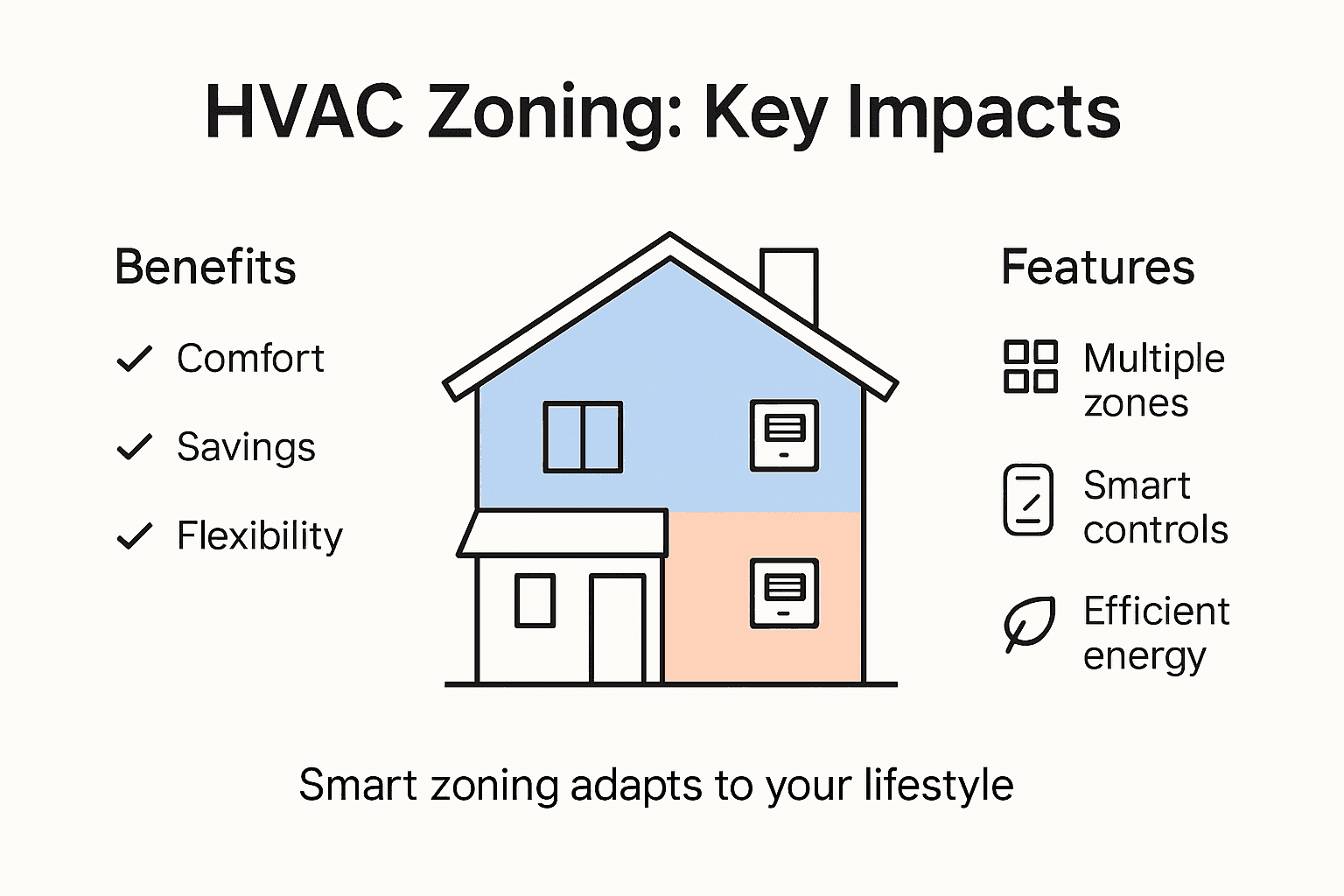
The initial investment in a zoned HVAC system typically ranges from 30% to 50% higher than traditional single-zone installations. This increased cost stems from additional components like multiple thermostats, advanced control panels, and motorized dampers. However, the long-term energy savings can quickly offset these upfront expenses. High-performance zoning technologies can deliver substantial energy savings, typically ranging from 10% to 40% depending on home size and usage patterns, creating a compelling financial argument for homeowners.
Breakdown of potential financial benefits includes:
- Reduced monthly utility bills
- Lower overall energy consumption
- Extended HVAC system lifespan
- Decreased wear and tear on heating and cooling equipment
- Potential increase in home resale value
The payback period for a zoned HVAC system varies but often falls between 3 to 5 years, after which homeowners begin to realize significant net financial gains. Factors influencing this timeline include local energy costs, home configuration, and specific zoning system design. Sophisticated homeowners can further optimize their investment by combining zoned systems with smart home technologies and programmable thermostats, maximizing both comfort and energy efficiency.
Pro tip: Request detailed energy savings projections from HVAC professionals before installation to understand your specific potential financial benefits.
Below is a summary of HVAC zoning financial considerations and energy impact:
| Factor | Zoned System | Standard System | Impact on Homeowner |
|---|---|---|---|
| Initial Cost | 30–50% higher | Lower | Higher upfront investment |
| Energy Savings | 10–40% reduction | Minimal savings | Lower monthly bills |
| System Lifespan | Extended | Standard | Fewer replacements needed |
| Payback Period | 3–5 years | Not applicable | Faster return on costs |
Common Mistakes and What to Avoid
Navigating the complexities of HVAC zoning requires careful planning and strategic implementation. Homeowners must be aware of common mistakes that can compromise system performance and undermine the potential energy efficiency benefits, making informed decisions crucial to successful zoning.
One of the most significant errors homeowners encounter is improper system sizing. Many mistakenly believe that simply adding dampers and multiple thermostats will solve their temperature control challenges. In reality, precise load calculations for each zone are essential. Oversized or undersized equipment can lead to inefficient operation, increased energy consumption, and uneven temperature distribution. Professional HVAC technicians use sophisticated calculations to determine the exact heating and cooling requirements for each distinct zone.
Critical mistakes to avoid in HVAC zoning include:
- Neglecting professional load calculations
- Improper thermostat placement
- Failing to balance airflow between zones
- Overlooking regular system maintenance
- Ignoring compatibility between zoning controls and existing HVAC equipment
Successful HVAC zoning requires comprehensive commissioning processes and ongoing system evaluation, beyond simple installation. Homeowners should work closely with qualified HVAC professionals who can design a system tailored to their specific home’s architectural characteristics, sun exposure, and occupancy patterns. Understanding the nuanced requirements of effective zoning prevents costly mistakes and ensures optimal comfort and energy efficiency.
Pro tip: Schedule an annual professional inspection to verify your zoning system’s performance and catch potential issues before they become expensive problems.
Take Control of Your Home Comfort with Expert HVAC Zoning Solutions
If uneven temperatures or high energy bills are disrupting your home comfort, it is time to explore professional HVAC zoning services. This article highlights how zoning systems use motorized dampers and advanced thermostats to deliver personalized temperature control in different areas of your home. At North End Plumbing, Heating & Air, we understand the challenges of creating balanced comfort in Sonoma, Marin, and Napa Counties homes. Our licensed technicians specialize in designing and installing zoning systems that maximize energy savings and deliver consistent comfort where you need it most.

Discover how our expert team can tailor an HVAC zoning solution to fit your unique home layout and heating and cooling needs. Visit North End Plumbing, Heating & Air today for honest estimates and lasting results. Start avoiding costly mistakes like improper sizing or poor thermostat placement by relying on trusted local professionals who prioritize your comfort and efficiency. Ready to transform your indoor environment with smart zoning technology? Contact us now to schedule your free home assessment and begin your journey toward individualized, efficient climate control.
Frequently Asked Questions
What is HVAC zoning?
HVAC zoning is a system that divides a home into independently controlled temperature areas, allowing precise temperature management in different rooms or zones instead of relying on a single thermostat for the entire house.
How do HVAC zoning systems work?
HVAC zoning systems use a network of dampers installed in air ducts, which open and close to direct heating and cooling to specific areas based on individual thermostat settings, ensuring comfortable temperatures in each designated zone.
What types of HVAC zoning systems are available?
The primary types of HVAC zoning systems include single-zone systems, which condition an entire space; multi-zone systems that allow for independent temperature controls in different areas; and variable air volume (VAV) systems that adjust airflow based on real-time demand, providing high precision and energy efficiency.
What are the benefits of using a zoned HVAC system?
Zoned HVAC systems offer several benefits, including improved comfort by providing tailored temperatures for different rooms, enhanced energy efficiency by targeting heating and cooling only where needed, and potential cost savings on utility bills due to reduced energy consumption.
Recommended
- What Is HVAC? Complete Guide for Homeowners – North End Plumbing, Heating and Air
- Heating & Air Services – North End Plumbing, Heating and Air
- 7 Essential Furnace Maintenance Tips for Local Homeowners – North End Plumbing, Heating and Air
- Heating & Air Services in Yountville, CA | North End HVAC